
Feeding 101: where to find your reward
Searching for wild plants in your area is a great way to shock with culinary pleasures. You don’t know where to start? Read more to get the information needed to feed yourself: where to do it and how to be sheltered. So go, adolescent collectors and start collecting a prize.
The following fragment comes from Certainty, harvest, feast Author: Marie Viljoen. Has been adapted to the network.
Where to feed?
For urban, the local farmers’ local market becomes an exhilarating place to find and sell wild food. I am enchanted, seeing edible invasions in neat packages on market tables. But it’s about the context. If paying 5 USD for a handful of field garlic or $ 25 for 1⁄4 pound Mugwort, which you can drive for free, is unattractive (or extremely witty when you see that it grows 10 feet along the fence of the chain link), start searching your area.
When you learn a recent plant, you will start noticing where it is developing.
Even in the cities there are places where lamb lodgings and amaranant can be collected in abundance or choose pounds of mature websites and black cherries. Make friends with local community gardens and neighbors.
Work with the managers of local parks and talk to the removal of invasive edible species for them. Sometimes you can join the freing volunteer and take the loot to the house. And if the diplomacy fails, I will certainly admit to the surgery of invasive weeds feeding where I know that the plant is simply a pest.
Increasingly, landscape architects and city planners implement more food products in their projects.
If this is not happening in your area yet, encourage. I am lucky to have a spectacular local class, Brooklyn Bridge Park. Its creators and designers have concluded a significant list of edible American plants. Although feeding is not allowed, it is an ideal place to learn and teach plants with native dining potential to encourage them to exploit them in domestic, vast or tiny gardens. On the road, the Gowanus school sells many of these plants. This kind of natural partnership (which in this case is accidental) should be more common.
If you have access to black nature, you are privileged. Be full of respect.
Fear for the future, in moderation and without stomping native ephemerals. If you are associated with the city, but you would like a wild feeding place, connect with local land trust, behave and make friends with the owners of the land who can let you feed on their land. Exist. If You They are the owner of the soil, consider the wild dining potential of your land and how to get it off and save it best.
Some of my best feed came from Farm Meadows and Fencers, with the consent of the farmer. Again, it’s about approaching responsible people and nice questions. Usually the answer is amused. Weeds in arable rows can be good to collect If They were not subjected to herbicides or high indicators of the exploit of fertilizers. (In the appropriate chapters I develop safety concerns for specific feed foods.)
Gardeners and breeders are also lucky. You have a lot to draw in terms of wild taste. Depending on the microclimate zone and the USDA resistance zone, you can cultivate many edible wild plants. Bring feed on your own yard.
Don’t kill yourself
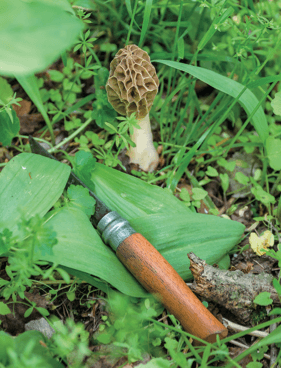 I mean, it’s obvious. The search is an act of independence. It carries a stern responsibility for informing himself. Treat all information, including mine, with a district and an open mind. Reference, check twice and remember that everyone can say everything on the internet in the voice of digital authority. Sometimes even published authors misunderstand this.
Be 100 percent certain identification of the plant or fungus before swallowing.
Eat only the prescribed part of the plant, at the appropriate stage of growth. If the recipe says that cook the plant, cook the plant.
If you eat recent food, there is always a scarce allergic reaction. Eat a tiny amount and wait twenty -four hours to see if you come or lose lunch.
The search can be an individual or common deed – just like food. Turning on wild dishes in everyday cooking means finding them, and finding them often leads to a meeting with others with similar passions. Although this book leads to a re -discovery of lost tastes and re -recognition for the plants that provide them, I hope that it leads to a feast with family and newly discovered friends.
Or if you are a misanthropic loner as so many of us collectors, a feast at the table for one.