

The Importance of Soil Health: 5 Key Principles of Well Soil
Want to improve the health of your soil and plants? Apply these soil health principles to effectively prepare your farm or garden to thrive.
The following excerpt is from Dirt to the soil By Gabe Brown. It has been adapted for exploit on the Internet.
(Photo courtesy of Gabe Brown.)
The importance of soil health
Our life depends on the soil. This knowledge is now so ingrained in me that it’s difficult to believe how many soil-damaging practices I was engaging in when I first started farming. I didn’t know any better. In college, I was taught everything about the current industrial production model, which is a model based on reductionist science, not on how natural ecosystems function.
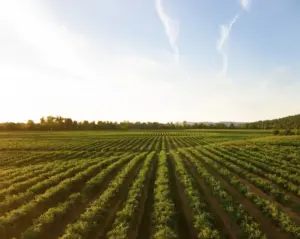 The story of my farm is how I transformed a severely degraded and low-profit operation, managed using an industrial production model, into a hearty and profitable one.
The journey involved many trials and constant experiments, as well as many failures and a few successes.
I had many teachers, including other farmers and ranchers, researchers, environmentalists, and my family.
But the best teacher of all is nature itself.
In my daily work on my farm, most of the decisions I make are, in one way or another, guided by the goal of further development and protection of the soil.
Five principles of soil health
I am guided by five principles that nature has developed over eons of time.
They are the same everywhere in the world where the sun shines and plants grow. Gardeners, farmers and ranchers around the world exploit these principles to cultivate nutrient-rich, deep topsoil with hearty watersheds.
1. Confined disruption
Limit mechanical, chemical and physical damage to the soil. Tilling destroys the soil structure.
It constantly destroys the “house” that nature builds to protect the organisms living in the soil that create its natural fertility.
Soil structure includes aggregates and pore spaces (holes that allow water to infiltrate the soil). The result of cultivation is soil erosion, i.e. wasting valuable natural resources.
Synthetic fertilizers, herbicides, pesticides and fungicides also have a negative impact on soil life.
2. Armor
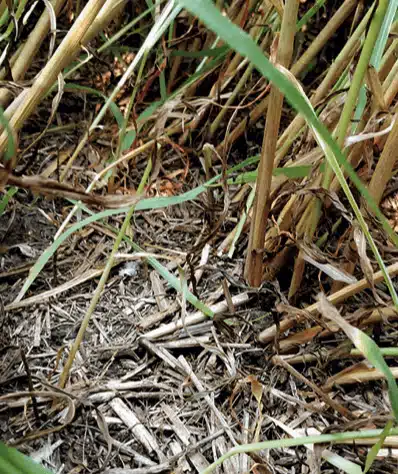
One way to raise resistance is to reinforce the soil. The armor is a remnant of the previous cover crop, and the cash crop grows through the armor. Photo courtesy of Gabe Brown.
Always keep the ground covered. This is a key step towards restoring soil health. Bare soil is an anomaly – nature always tries to cover it.
Providing a natural “armor mantle” protects the soil from wind and water erosion while providing food and habitat for macro- and micro-organisms.
It will also prevent moisture from evaporating and weed seeds from germinating.
3. Diversity
Strive for a diversity of plant and animal species. Where can you find monocultures in nature? Only where people put them!
When I look at an area of native prairie, one of the first things I notice is the incredible diversity.
Grasses, herbs, legumes and shrubs live and develop in harmony with each other. Think about what each of these genres has to offer.
Some have shallow roots, some have deep roots, some have fibrous roots, and some have tap roots. Some are high carbon, some are low carbon, and some are legumes. Each of them plays a role in maintaining soil health.
Diversity improves the functioning of the ecosystem.
4. Living roots
Keep the root alive in the soil as long as possible, year-round. Take a spring walk and you’ll see green plants poking through the remnants of snow.
Follow the same path in slow fall or early winter and you’ll still see green, growing plants, a sign of living roots.
These living roots feed the soil’s biology by providing it with its primary food source: carbon.
This biology, in turn, drives the cycle of nutrients that plants feed on. Where I live in central North Dakota, we usually get our last spring frost in mid-May and our first fall frost around mid-September.
I used to think that these 120 days were my entire growing season. How wrong I was.
We now plant biennials with fall seeds that grow until early winter and break dormancy earlier in the spring, thus nourishing soil organisms at a time when croplands lay barren.
5. Integrated animals
Nature does not function without animals. It’s that straightforward. Including livestock in your operation offers many benefits. The main benefit is that grazing plants stimulates plants to pump more carbon into the soil. This drives nutrient cycling, fueling biology.
Of course, this also has a major positive impact on climate change by removing more carbon from the atmosphere and putting it into the soil.
And if you want a hearty, functioning ecosystem on your farm or ranch, you must provide a home and habitat not only for farm animals, but also for pollinators, predatory insects, earthworms and all the microbiology that drives the functioning of the ecosystem.