

How to Grow a Year-Round Indoor Salad Garden
Do you dream of fresh vegetables and a colorful salad in cool weather? Grow and harvest sprouts indoors to make those dreams come true!
I tried all of these methods and more to get what I needed for a year-round house salad. This chapter discusses the methods I used and the reasons why I chose to grow ground sprouts over others.
Benefits of growing in soil
Some may wonder, “Why grow sprouts in soil?” You may ask, “Why not grow sprouts in jars like everyone else?”
When I first started experimenting with gardening techniques, I was already sprouting alfalfa and mung beans in jars. Based on this, I expanded the types of seeds I sprouted. I added clover, lentils, various sprout mixtures, and even tried onion seeds because they were in the catalogs.
I sprouted in jars, baskets, bags, and plastic sprouters like the Biosta sprouter, all to create an indoor garden that could fill a salad bowl. One problem with these sprouts had no solution: my family was indifferent to the salads I prepared.
They didn’t mind adding sprouts to a leafy salad, and they didn’t mind mung bean sprouts stir-fried with other vegetables, but there were enough sprouts for everyone.
I was looking for vegetables that I could grow and operate exclusively for a tossed green salad.
I liked these early, conventional sprouts, but to tell you the truth, I wasn’t entirely satisfied either. When I served lush and delicious greens grown from soil-grown sprouts, my family’s reaction told the story I wanted to hear. Everyone, including the kids, enjoyed the salads.
I had the variety of vegetables I was looking for – the sprouts grown in the ground looked like regular tossed salad vegetables. I achieved the look and texture I wanted.
10 good reasons to sprout in soil compared to conventional methods
Most gurus in the field agree that sprouts grown on the ground are also more nutritious. It is suggested that roots can take up full nutrients from soil, compost and seaweed meal continuously during growth, even in a very compact growing cycle.
I haven’t found any studies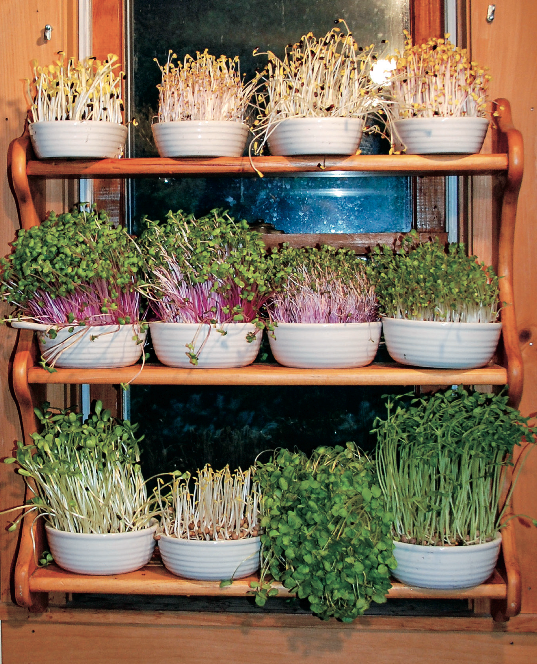 Back up this claim, but there is plenty of evidence to show that soil sprouts are a good food. I don’t see the point in trying to make them “better” to justify growing them on the land; there are many good reasons to grow soil sprouts already!
Here are my most essential reasons why it is worth developing this way:
1. The scales fall off as the sprouts grow
The great advantage of growing soil sprouts is that there is no need to wash the husks off the sprouts. The scales fall off on their own as the leaves grow and open.
For jar-grown sprouts, whether alfalfa or mung beans, washing to separate the husks from the sprouts is tedious work. Heaven knows I have cleansed them enough.
There are some tricks to it, but generally it takes a while to remove the scales. No matter what you do, it seems you can’t get rid of them all. Hulls mixed with greens tend to raise the spoilage rate and may affect the flavor of the sprouts.
With soil sprouts, the hulls fall off as they grow and require only minimal washing. In some cases, there may be some scales that stick to the seed leaf, but it’s uncomplicated to tear off the few that remain, and that’s nothing compared to mixing all the scales with the greens.
2. You can store directly on the tray
Once the soil sprouts are ready, they can be “stored” directly in the tray for a few additional days. Just water once a day and they will stay fresh and green until ready to harvest.
In fact, soil sprouts continue to grow. However, after a few days of storage, the tips of my jar sprouts start to turn slightly brown and the husks tend to rot.
They have to go in the fridge if I don’t feel like using them right away, and even then they need to be rinsed regularly to keep them from spoiling. And in the case of store-bought sprouts, the roots are often brown and unattractive.
3. Simple to care for
For the first 4 days, you do nothing with the soil sprouts. They lie in the obscure on a shelf or in a cupboard. After planting the seeds, humid soil and humid paper covers provide ideal conditions for the seeds to grow, and no watering is necessary in the initial phase.
On the fifth day, when the cover is removed and the tray is in the lithe, water only once a day. This is much easier than rinsing jars, baskets or bags two or three times a day.
4. Hearty vegetables
If you miss watering, it won’t be a disaster with soil sprouts; there is enough moisture in the soil for the sprouts to survive all day. If you really screw up and come home with limp vegetables, apply CPR to the soil sprouts – water the tray, put it in a plastic bag, and put it in the fridge.
This works well – they come back to life! This is not the case with sprouts in a jar, which spoil quickly without regular care; there is no way to revive them.
5. Creates “green space”
It’s great to see greenery growing around the house and kitchen. Some seeds produce pink and purple stems and add a touch of life to the room. Sometimes I put trays in ceramic pots to add variety to my indoor salad garden.
Even in petite trays, the vegetables are a welcome sight and go well with my wife’s potted plants. In the middle of winter, when vegetables are growing and even blooming, they remind me that the cool is only for a while; soon I will be outdoors in the garden again!
The same applies if you live in an apartment and have no place to garden. A few trays of fresh greens facilitate satisfy the need for gardening and provide a green space in the atmosphere of the apartment, while jars or sprouts may not add much to the indoor landscape.
Growing soil sprouts at home freshens the air with oxygen, just like regular potted plants. Could you ask for a better air freshener?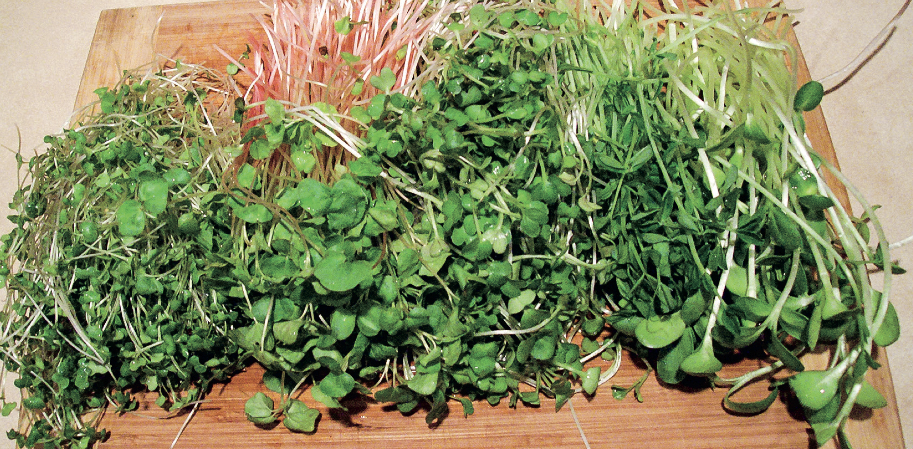
6. Visualize the harvest
Another thing I like about fresh vegetable trays is that I can see what’s ready to be harvested, which makes it uncomplicated to visualize what’s going to be for dinner. I often choose trays to collect, watering them before dinner.
Since sprouts are stored in jars, bags and plastic trays, there is no uncomplicated way to see which ones are nearing harvest.
7. Much faster and easier than microgreens
If you’ve ever grown microgreens, you know they won’t be ready in 7 days. If you are lucky and choose the right varieties of vegetables, you can harvest them in about 21 days.
So before you could even start eating microgreens, you’ve already harvested soil sprouts three times and are planting a fourth set of sprout trays.
I find that about every week you can harvest over a pound of vegetables from trays that are just 1 square foot in size. Compare this to the size of any greenhouse, cool storage or garden plot and you’ll be clicking your heels and singing a song.
Additionally, microgreens need additional lithe to grow indoors; without electric lighting, micro leaves become long and spindly.
8. Simpler than hydroponics
Anything with a recirculating pump reminds me more of a swimming pool than a garden. Don’t get me wrong: I like greenhouses and the hydroponically grown tomatoes I buy at the store in the winter.
I’m glad someone has patience and is willing to play with the equipment. But when I look at the equipment and the list of substrate ingredients, I know I don’t have the time, space or patience to operate this technique. Just give me the seeds and soil and I’ll be ready to garden.
9. Great taste
Soil sprout salad is full of wealthy flavors and textures. Sunflower petals are crunchy and have a subtle nutty flavor. Buckwheat lettuce has a tender consistency and a sweet and sour taste. Pea shoots have a sweet, pea-like taste. The thought of an alfalfa sprout salad isn’t as appealing or flavorful to me.
While it’s all well and good for you, I guarantee my kids would look at me cross-eyed if I tried to sell it to them as a salad!
10. More color and texture
The vivid stems of soil sprouts make a lovely and invigorating salad mix. The vivid red stems of Hong Vit radish, the purple stems of purple kohlrabi, the vivid pearly white of broccoli and sunflower – all come together in the salad bowl to create a festival of colors.
Add the tender pink and sometimes deep red of buckwheat and the vivid orange of grated carrots – there’s nothing like these salads.
A quick guide to year-round green areas
Follow this quick guide to year-round vegetables for fresh salads in just a few weeks!