

Seed Saver: Become a Plant Breeder
By saving seeds, you become a plant breeder! By taking control of your seeds, you can grow the best time-honored and regional varieties and even develop your own. Learn seed saving and plant breeding techniques to save money, keep access to your favorite varieties, escalate your seed supply, and adapt plants to your garden.
The following excerpt is from Grow your own vegetable varieties By Karol Deppe. It has been adapted for employ on the Internet.
Become a plant breeder
Growing modern vegetables does not require specialized education, a lot of land or even a lot of time. This can be done on any scale. It’s nice. It’s deeply satisfying. You can get useful modern varieties much faster than you might think. And you can eat your mistakes.
Gardeners buy only compact quantities of seeds compared to commercial growers, so the seed varieties that are best suited to gardeners are only sold in compact quantities. Enormous seed companies often cannot afford this. No one can make money developing this. So no one is.
If we gardeners want good modern garden varieties, we will have to grow them ourselves.
But it is as it should be. Gardeners have been developing their own varieties for centuries. Besides, why should we let professionals have fun?
Why save seeds?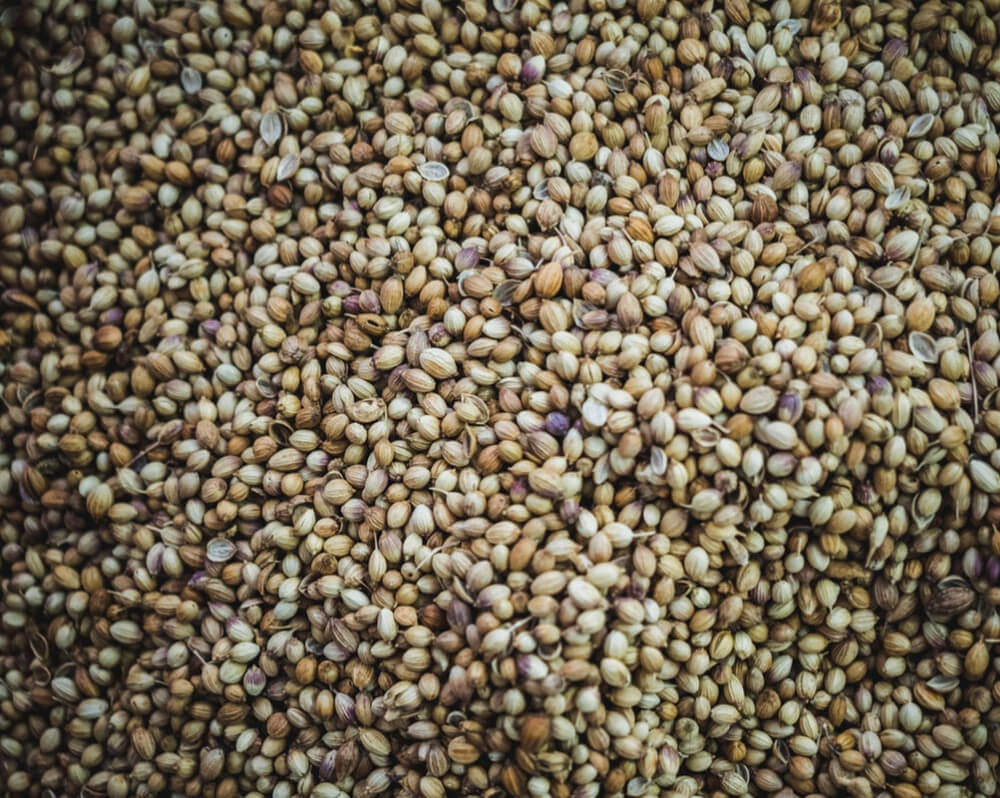
Saving seeds is great fun. Cleaning seeds and holding tidy seeds in your hands is magical.
Look at the seed, run your fingers over it, play with it and you will feel the connections. You are like a child with a gallon bucket of marbles or a squirrel sitting on a hollow log full of acorns.
Unquenchable joy arises. It’s so intense that it takes you by surprise at first. Then you recognize it. It’s the joy of being who you’re supposed to be and doing what you’re supposed to do.
Saving seeds is practical. If you know how to save your own seeds, you can grow uncommon varieties.
Many of the most spectacularly aromatic and unique varieties are not readily available commercially, either as fruit or seed.
For example, one of my favorite winter squashes is the ‘Blue Banana’. The taste of this pumpkin is wonderful, intense and so different from all other pumpkins that it resembles a completely different vegetable. But the seeds are not commercially available.
Becoming a plant breeder: growing uncommon varieties
To grow uncommon varieties, you often have to obtain seeds when and where they are available and then nurture the variety yourself.
Some varieties are not available because they have specific characteristics related to the production of the seeds themselves. If, for example, a watermelon produces few seeds, it will usually not be offered commercially. Seed production is simply too pricey.
However, the home gardener may be cheerful to save such seeds. And a market garden can easily produce the handful of seeds needed to plant one field.
Being dependent on seed companies for seeds means being dependent on random fads in food and the choices and preferences of others. Saving your own seed means independence. It allows you to make your own choices and have your own preferences.
Convenience of saving seeds
When you save your own seeds, they will always be “available”. Nowadays, it often happens that all seeds, even of very popular varieties, are produced by one breeder. If a grower experiences a crop failure, the seeds won’t be available anywhere.
Sometimes, even if the seed is “available”, you can’t necessarily find it. There may be a destitute correlation between the variety names and the material you actually receive. Seed companies often change lines or suppliers, so what they sell one year and the next may be different varieties even though they have the same name.
I like to produce my own seeds, even varieties that are readily available commercially. My own seeds are usually larger, thicker and more vigorous. I can plant it earlier than commercial seeds. I also have a lot more of it, so I don’t have to save.
I can sow heavily and then slender out, instead of sowing thinly and having gaps that will have to be replanted later and less optimally. And with my own seeds, the price is right.
How to become a plant breeder
When you save seeds, you become a plant breeder. You choose which germplasm to perpetuate. This means that you both deliberately and automatically select the characteristics that are vital to you, plants that are adapted to your needs and the growing conditions and region.
After storing the seeds of a particular variety for a few years, you have your own line of that variety, which is slightly different from the others and is usually better suited to your needs.
Knowing how to save your own seeds also means you can take advantage of genetic accidents, ideas and dreams. For example, last year I noticed that one in about a hundred pumpkin plants was resistant to powdery mildew. I saved the seeds from it.
Perhaps I can employ them to develop modern varieties that are resistant to powdery mildew. Powdery mildew after the first autumn rains ends the pumpkin growing season in my region. Resistant varieties can be very useful. Many modern varieties were created when some gardener or farmer simply noticed something different and unique and saved the seeds.
We, gardeners and farmers, care about our direct relationship with the soil, plants and food. Growing plants from seeds you buy from others is one level of relationship. Growing plants from your own seeds, saving seeds from our plants, goes to a deeper level.
It is fulfillment and continuity – plants and people support each other, nurture each other and evolve together. This completes the circle.
Saving seeds from hybrids
Hybrids do not breed true to type from seed.
Some hybrids are even sterile, although most of them produce seeds. A purebred variety can be obtained from these seeds using the methods described in Chapters 9 and 10.
Such a variety derived from a hybrid is a modern variety and should receive a modern name.
It is not the same as the hybrid from which it comes.
In other words, you can save the hybrid seeds, which will be the first step in creating a modern open-pollinated variety, but you cannot breed the hybrid by saving its seeds.
Therefore, this section on seed saving practices applies to purebred varieties, not hybrids.
Seed Saving Review
Saving seeds is simple. Plants want to produce seeds. They cooperate fully. To save the seeds, simply allow the plants to produce seeds and then catch them quickly before the birds, squirrels or bugs come, before the rain comes and the pod develops mold or sprouts.
Saving seeds of pure varieties is a completely different matter. Plants don’t care about pure varieties at all.
All cross breeders would prefer to cross with this strange, inedible ornamental variety along the street, in your neighbor’s yard. Even inbreeding breeders interbreed much more often than they “should”, especially under organic growing conditions.
To save seeds of pure varieties, we need to know something about the hybridization tendencies of crops in order to be able to isolate them sufficiently from other varieties or wild plants of the species with which it may cross.
Genetic variability
Finally, each variety is characterized by genetic variability. Some of them are desirable and even necessary for the variety’s vigor and adaptability.
However, some of them are undesirable. We therefore need to breed enough plants to maintain the desired level of genetic variability. At the same time, we need to select and eliminate genes associated with specific types of variation that we do not want.
Given the genetic heterogeneity of most varieties and the greater vigor of more wild forms, the natural tendency of most varieties is to quickly evolve into something that is much less useful to human companions. To maintain diversity, we must actively reproduce and counter this trend.
There is actually no such thing as “saving” a pure variety. There is only further breeding, intentional or accidental.
We select either to keep the variety in its current form and eliminate undesirable types, or we select to change the variety in some preferred direction.
Both processes are based on exactly the same principles.
Roles and goals
“What is my role with this variation?” This is the first thing I ask myself with any seed saving project.
Am I the sole savior or creator of this variety, the one person without whom it would be lost forever? Or maybe my line is better than all the others and especially deserves to be preserved and spread?
Do I plan to accumulate valuable supplies and then donate or sell them to seed companies or other entities? Will I distribute it through Seed Savers Exchange?
Will many, or even all, future plantings of this variety across the country be descendants of the seeds I hold in my hands today?
If so, I will want to be careful and strict. I will employ a immense number of plants and immense isolation distances.
Saving seeds for yourself
However, I often save seeds just for myself and I know others have this variety too. In this case, I can be quite casual about almost anything. Number of plants? I grow what I need for the table and employ special tricks to deal with maintaining heterogeneity.
Insulation? It is often minimal. I usually plant so that I can recognize hybrids, which is much easier than avoiding them.
If I can recognize hybrids, I can eliminate them or not as I choose in future generations. Who knows? The hybrid may be more intriguing than the original material. And if the seeds are only for my own employ, what’s a crossbreed or two among friends?