

Miso soup for the soul
Miso soup is the perfect soul-healing meal. This soup not only tastes delicious, but also has amazing health properties.
Add a little imagination and you can build your own culinary creation on this humble miso soup base.
Below is an excerpt Wild fermentation by Sandor Katz. It has been adapted for exploit on the Internet.
Toasty your soul with Miso soup
The classic way to enjoy miso is with miso soup. The comfort and healing that Jewish grandmothers proverbially offered in the form of chicken soup was more often found in miso soup. No food I know has a more soothing effect.
When you make miso soup, miso is the last thing you add. In its simplest form, miso soup is simply heated water with miso added, about 1 tablespoon (15 milliliters) of miso per cup (250 milliliters) of water. Add heated water to the miso and mix thoroughly. Cooking the miso will kill it.
Miso soup, on the other hand, can be as elaborate as you want. I usually start by adding seaweed. Seaweed has a deep, convoluted flavor. Some people think calling them sea vegetables sounds more appealing. But I like to honor their wildness by calling them weeds. They carry the essence of the sea. They are luxurious in nutritional and medicinal properties. One of their particular benefits is a compound called alginic acid, which binds to weighty metals such as lead and mercury and radioactive elements such as strontium-90 and

transports them from the body (similar to dipicolinic acid from miso).
Seaweed also nourishes the cardiovascular system, improves digestion, helps regulate metabolism and glandular and hormonal flow, and calms the nervous system. I love adding seaweed to almost everything I cook. Miso soup is almost always prepared with seaweed. Japanese recipes for dashior soup broth, traditionally called kombuseaweed from the Pacific Ocean. I source my seaweed from miniature harvesters on the coast of Maine kombu has not been found. This is called the North Atlantic equivalent Digital laminaria. Digitata is a hefty and resistant variety of seaweed. The growth of each stem divides into several digits with wavy, green-brown flesh, hence the name Digita.
Making Miso: Collecting Seaweed
I had an unforgettable experience harvesting fingerlings under the guidance of seaweed harvesting partners Matt and Raivo of Ironbound Island Seaweed on the Schoodic Peninsula in “Downeast” Maine. We got up at four in the morning, squeezed into tight suits and drove to the port. We got into a wooden boat that Matt built himself and towed a smaller wooden boat that he also built. Do it yourself has no limits. For a long time we sailed through the composed waters of the bay towards the misty dawn. I wondered how my guides could navigate the dense gray where sea, sky and land blended into one. We saw seagulls and seals. The water became rougher. We headed out of the harbor towards the turbulent waters of the ocean where Digita thrives.
We arrived at our destination just as the tide was low enough to allow us access. Seaweed harvesting is governed by tides. Matt and Raivo do almost all of their harvesting during the week of each month when the tides are at their lowest. We anchored the huge boat and boarded the smaller one, then headed toward a huge stand of cichlids growing out of an underwater ledge. As we approached the digit, we jumped out of the boat into the cool, choppy water. Matt and Raivo took turns staying on the boat to keep it from floating away, paddling back to where we were so we could throw the collected numbers into the boat.
There I was in the ocean, with a keen knife in my hand. The idea was to stand on the ledge where the citadel was growing and cut off the stem to harvest it. Sounds uncomplicated enough. And that would have happened if the waves had been kind enough to stop. But every time a wave rolled in rhythmically, suddenly the water above the ledge I was standing on was about five feet deep instead of two. Reaching the toe stalk in deeper water required submerging the entire body, including the head, in the ocean. Half the time the wave knocked me off the ledge.

Miso fermenting in huge barrels at South River Miso in Massachusetts.
I spent most of that morning flailing around with a knife in one hand and seaweed in the other, feeling like Lucy Ricardo on yet another crazy adventure. Once I had a handful of numbers, the goal was to get them into the rowboat, which was another challenge made worse by coarse water. It was crazy and incredibly fun, no matter how little I managed to muster.
As my body was tossed by the waves, I identified with the seaweed, whose life is a constant push and pull of tidal influences. A few miniature rowboat loads later, the tide had risen too high for us to continue, so we paddled back to South Gouldsboro Harbor in the morning sun, on the slippery surface of numbers.
Once we got back to Matt and Raivo’s apartment, we took off our suits and ate, then started hanging all the seaweed to arid. Each plant requires an individual approach. After hours of hanging fingers, our hands became covered with sticky, gelatinous slime. Another time, while helping Matt and Raivo hang damp seaweed, I had just been in a car accident. I found that the elastic, slimy seaweed absorbed the shocks of my body. Eating seaweed provides that soothing, absorbent quality to your digestive tract.
Most seaweed available in the United States is imported from Japan, where it is a popular staple ingredient and is intensively farmed. I want to support kelp bioregionalism and urge readers to support miniature seaweed harvesters in America’s coastal waters. Matt and Raivo sell the seaweed as Ironbound Island seaweed. Other seaweed harvesting companies I can recommend are Larch Hanson in Maine and Ryan Drum in Washington. Contact information for these providers can be found in the Cultural Resources section.
Recipe for homemade miso soup
We made miso soup. Utilize what you have in the fridge or garden and need to exploit. Here’s how I do it:
- Start with water. One quart (1 liter) of water is enough for soup for 2 to 4 people. The amounts of the remaining ingredients are proportional to one quart of water. Start heating the water to a boil while adding the other ingredients; when it boils, reduce the heat and simmer.
- First add the seaweed. During cooking, its flavors and properties melt into the broth. I exploit scissors to cut dried seaweed into miniature pieces that fit more easily into a spoon.
- Cut an 8- to 10-centimeter long strip of cypress, kombu, or another variety of seaweed, or more than one type. Add miniature pieces of seaweed to the water. Once it starts to cook for a few minutes, you will get classic Japanese dashior spare. Make it into miso soup or make it fancier.

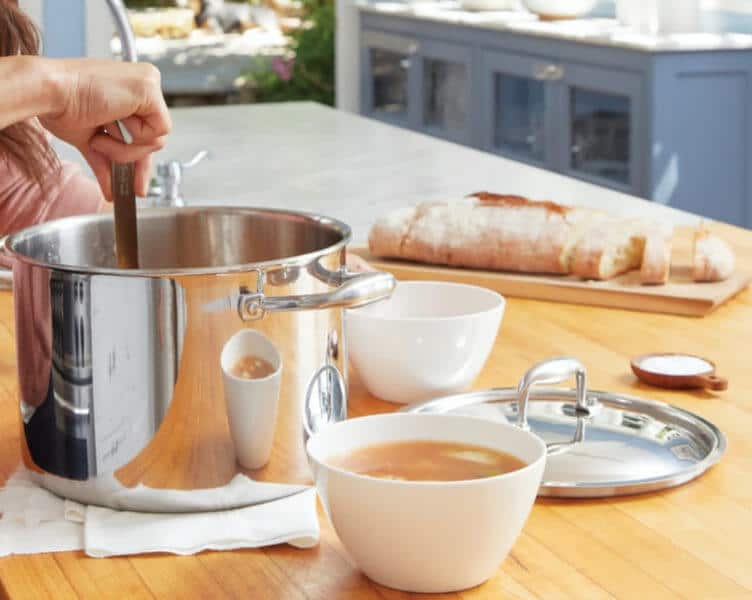
The next thing I add is root vegetables. Burdock root (mushroom in Japanese) gives the soup a hearty, earthy flavor as well as its toning and cleansing properties. Utilize about half of the burdock root. Cut it lengthwise and then into skinny crescents.
- Also chop the carrot and/or part of the daikon root. Add the root vegetables to the pot with the broth.
- Then I add mushrooms if I have them nearby. Shiitake is my favorite dish, but any type goes well with soup. I never wash mushrooms because they are very absorbent and I prefer them to absorb soup rather than plain water. Just wipe off any observable dirt. Chop 3 or 4 mushrooms into pieces miniature enough to fit in a spoon and add them to the soup broth.
- Cabbage is good in miso, just a little, finely chopped and added to the broth.
- If you want a heartier soup, you can add tofu. Take about half a pound (250 grams) of tofu, rinse it, cut it into miniature cubes and add it to the broth. If you have cooked whole grains left, add a spoonful of them to the broth. Break up any lumps with a spoon. Soups are a great opportunity to exploit up leftovers.
- Peel and chop four (or more!) garlic cloves and prepare any green vegetables. Cut miniature pieces of florets from the broccoli stem or chop a few leaves of kale, collard greens or other vegetables.
- Check that the root vegetables are tender and the tofu is heated. When this happens, turn off the flame.
- Remove a glass of broth and add the garlic and green vegetables to the pot. Cover the pot.
- Crush about 3 tablespoons (45 milliliters) of miso into the cup of the reserved broth. For a hearty soup, you can also add 2 tablespoons (30 milliliters) of tahini. Once everything is mixed well, add it back to the pot with the broth and stir. Taste the soup. Add more miso if necessary, using the same technique.
- Decorate the soup with chopped onions, wild onions or chives. Enjoy. This soup is a one-dish meal.
- When reheating leftover soup, heat it gently, trying not to boil the miso.
